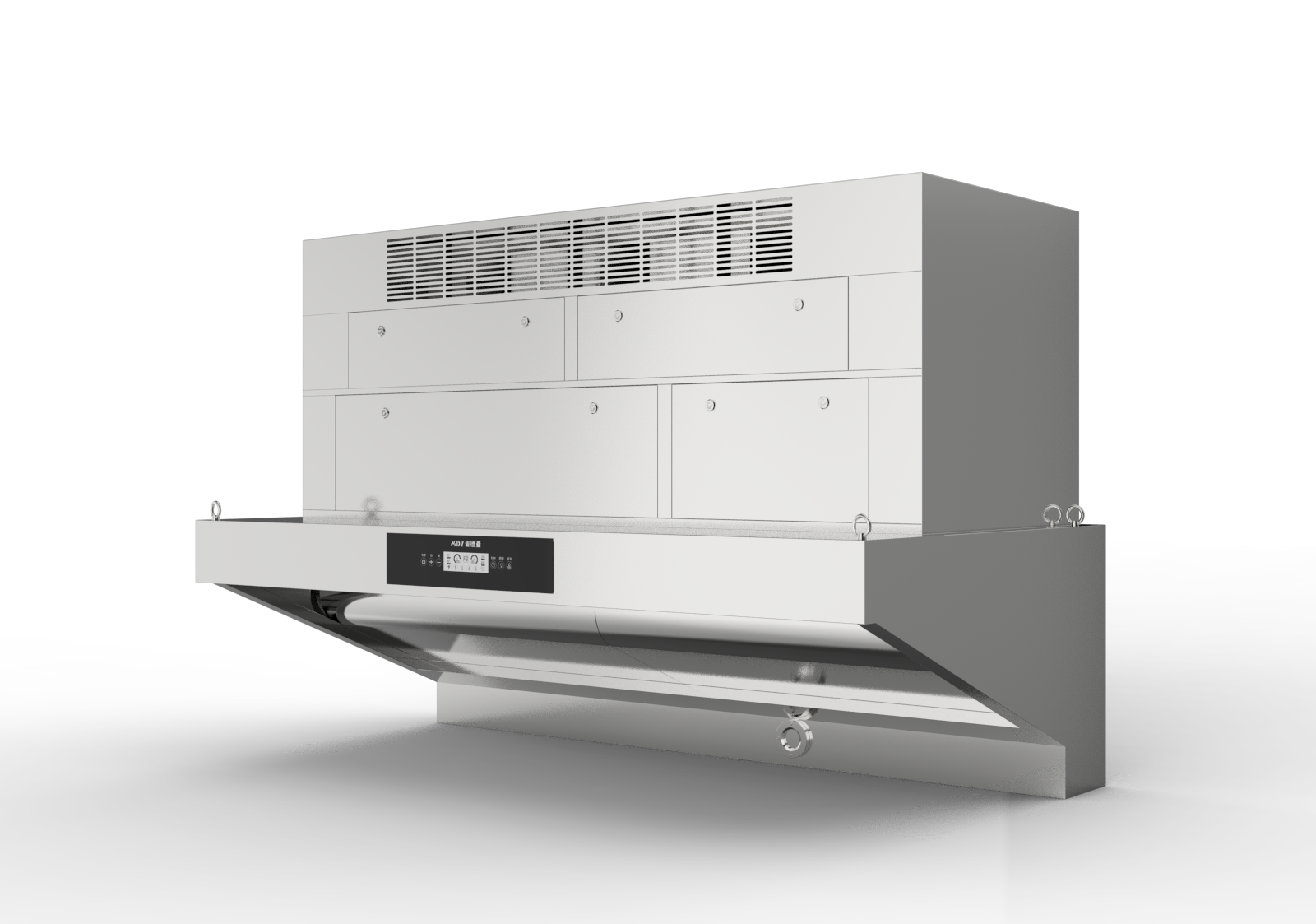
The dream of a commercial kitchen with zero ductwork was once impossible. Today, Souniny ductless ESP makes it real — but it requires careful design to ensure performance, code compliance, and operational success. This guide covers everything you need to know.
| Parameter | Specification |
|---|---|
| What Ventless Means | Air is cleaned and recirculated within the space; no external exhaust discharge |
| Code Compliance | Must meet UL 710B (USA), EN 16282 (EU), or local equivalent for recirculating hoods |
| HVAC Interaction | Kitchen HVAC must handle the sensible and latent heat load that ducted systems would remove |
| Fire Safety | ESP eliminates duct fire risk; local AHJ may require additional fire suppression |
| Equipment Limits | Ventless suitable for electric and gas equipment up to certain kW/BTU limits (jurisdiction-dependent) |
Application Scenarios
- Architect’s ventless design process: An architecture firm specializing in F&B design developed a ventless kitchen design checklist based on Souniny system capabilities: (1) verify local code acceptance of recirculating hoods, (2) calculate additional HVAC cooling load from retained kitchen heat, (3) specify ESP model with carbon+UV for complete odor control, (4) include make-up air for kitchen ventilation code requirements (separate from exhaust), (5) coordinate with fire protection engineer for hood suppression system. The checklist has been used on 20+ projects without a single code compliance issue.
- Converting from ducted to ventless (mall renovation): A shopping mall renovation reconfigured the food court layout, making the existing duct routes obsolete. Rather than installing new ductwork (estimated cost: $150,000 and 3 months), the mall converted to ventless Souniny ESP at each outlet. The conversion was completed in 3 weeks and cost 40% of the ducted alternative.
- Ventless kitchen in extreme climate (Dubai): A restaurant in Dubai switched from ducted to ventless, and the energy impact was monitored for 12 months. Key finding: while the kitchen HVAC cooling load increased by 18% (captured cooking heat now stays in the kitchen), the elimination of make-up air cooling for the exhaust reduced overall building cooling load by 22%. Net energy savings: 15% annually.