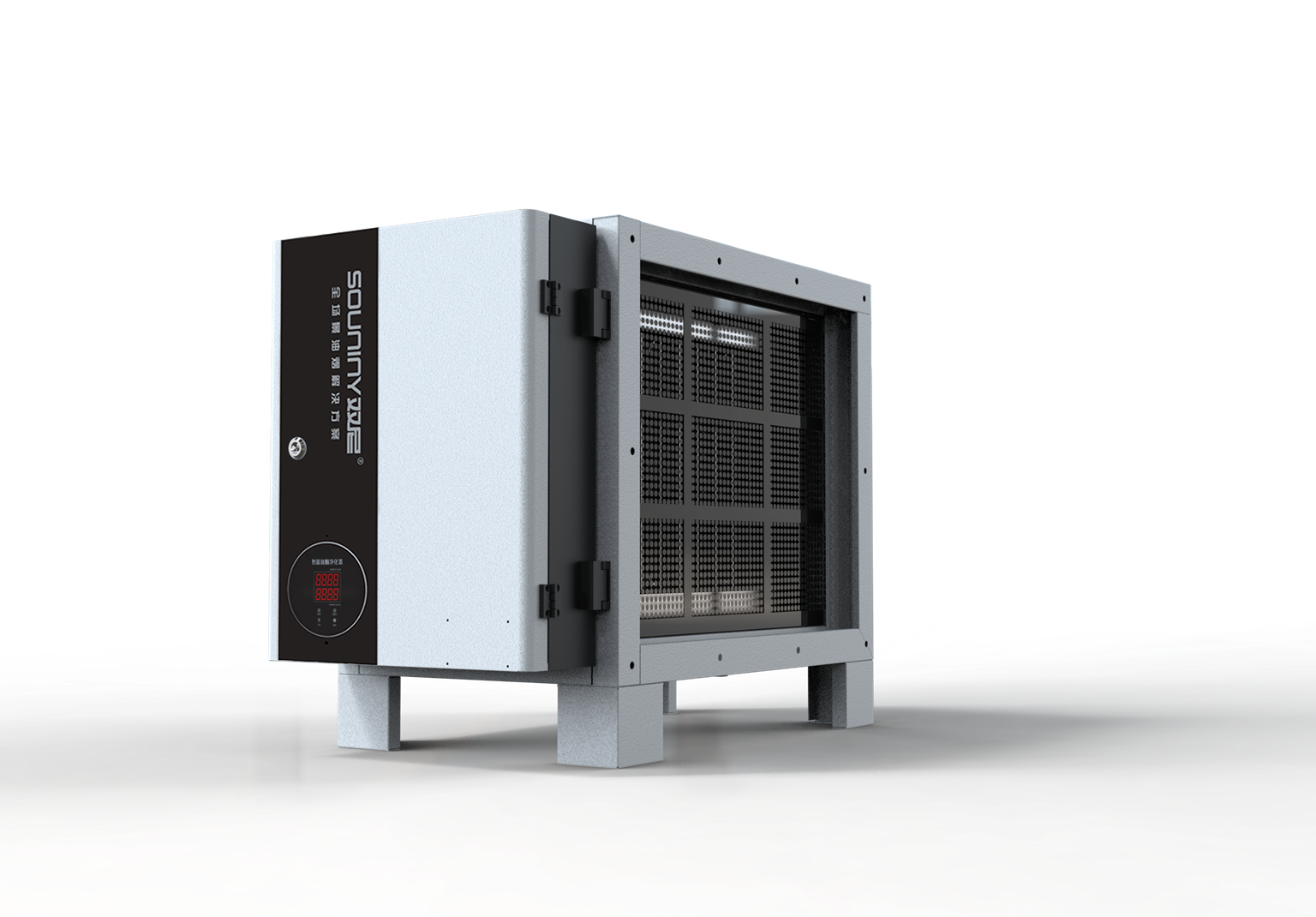
The pre-filter is the unsung hero of kitchen ESP systems. While all attention goes to the high-voltage ESP cell, it is the pre-filter that determines how quickly the cell fouls, how often maintenance is needed, and how well the system handles cooking methods that generate large droplets or particles. Selecting the right pre-filter for your cooking profile is critical.
| Parameter | Specification |
|---|---|
| Mesh Pre-Filter | Best for: general cooking; Captures particles >50μm; Washable; Lowest pressure drop; Weekly cleaning |
| Baffle Grease Filter | Best for: heavy grease (frying, grilling); Captures droplets >10μm; Self-draining; Less frequent cleaning than mesh |
| Cyclone Separator | Best for: very heavy particulate (wok, charcoal); Captures particles >5μm + large droplets; 90%+ efficiency for >10μm; Installed upstream of ESP; For coffee roasting, wok cooking, BBQ |
Application Scenarios
- Multi-cuisine restaurant pre-filter strategy: A restaurant with wok, grill, and fry stations uses different pre-filters per zone: cyclone separator on wok exhaust (heavy particulate), baffle on grill exhaust (heavy grease droplets), mesh on fry station exhaust (medium load). The zoned approach extends ESP cell cleaning intervals by 30-50% compared to uniform mesh pre-filters — the facility manager reports that cells that previously required bi-weekly cleaning now last 3-4 weeks.
- Coffee roaster cyclone integration: A specialty coffee roastery uses the Coffee Exhaust Purifier with integrated cyclone separator. The cyclone captures 95% of chaff and large smoke particles before they reach the ESP cell, dramatically reducing cell loading. The collected chaff is clean enough to sell as garden mulch — converting a waste product into a small revenue source.
- Pre-filter neglect case study: A restaurant kitchen that had disconnected the pre-filter cleaning hose “because it was annoying” experienced rapid ESP cell fouling (cleaning required weekly instead of monthly) and a 30% drop in extraction airflow due to cell loading. Restoring proper pre-filter maintenance returned system performance to specification within one cleaning cycle. The lesson: pre-filter maintenance is not optional — it directly determines ESP cell life and system performance.