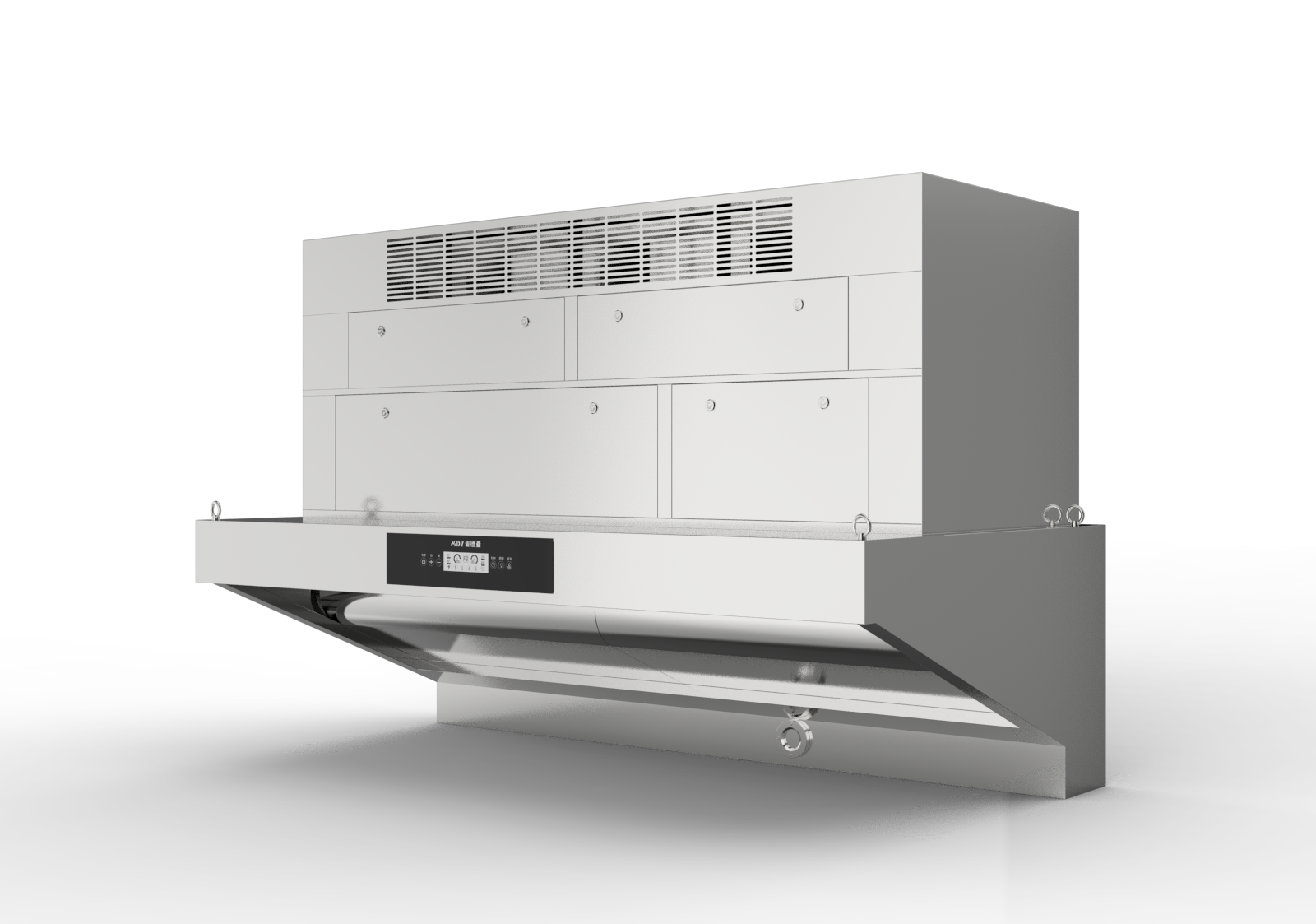
The energy cost of kitchen ventilation is often the largest single component of a commercial kitchen’s utility bill — not the cooking equipment, not the refrigeration, but the HVAC penalty of exhausting conditioned air and replacing it with unconditioned outdoor air. Ductless ESP purification eliminates this penalty entirely, offering energy savings that can exceed the equipment cost within 2-3 years.
| Parameter | Specification |
|---|---|
| Make-Up Air Cooling Load (Tropical) | ~25-35 kW per 10,000 m³/h exhaust in 34°C/80%RH conditions |
| Make-Up Air Heating Load (Cold Climate) | ~40-60 kW per 10,000 m³/h exhaust in -10°C conditions |
| Ductless Energy Saving | 100% elimination of make-up air conditioning for purified recirculated air |
| Typical Annual Saving (Tropical, 6,000 m³/h) | 25,000-40,000 kWh ($3,000-6,000 at industrial rates) |
| Fan Energy Reduction | Ductless: no long duct friction losses; fan savings 15-30% vs ducted |
| Carbon Cost Impact | 1-3 tonnes CO₂ per 1,000 kWh saved (grid-dependent) |
Application Scenarios
- Shopping mall food court (Bangkok): A food court with combined kitchen exhaust of 24,000 m³/h evaluated ducted vs ductless. Ducted: make-up air cooling load of approximately 280 kW (34°C outdoor, 24°C indoor). Ductless: recirculation eliminates this load, saving approximately 190,000 kWh annually in cooling energy. At Thai commercial electricity rates, the saving was $22,000/year — recovering the ESP equipment cost premium in 18 months.
- Restaurant in heated climate (Moscow): A 150-seat restaurant with 8,000 m³/h exhaust evaluated the heating cost of make-up air during Moscow’s 6-month heating season (-20°C to 0°C outdoor). Ducted: make-up air heating load averaged 45 kW, consuming approximately 55,000 kWh of gas annually. Ductless: zero make-up air heating. At Russian commercial gas rates, annual saving was approximately $4,500.
- LEED-certified restaurant (California): A restaurant pursuing LEED certification used Souniny ductless ESP as a key energy efficiency measure. The elimination of make-up air conditioning contributed 8 points toward the Energy & Atmosphere credit category — the difference between Silver and Gold certification. The energy model showed a 22% reduction in total building energy use vs the baseline ducted design.
- Dark kitchen facility (London): A multi-tenant dark kitchen with 20,000 m³/h total exhaust chose ductless specifically for energy economics. The facility’s energy consultant calculated that ducted would require 230 kW of additional cooling capacity for make-up air — requiring a chiller upgrade that would cost £60,000 in capital plus £25,000/year in operating cost. Ductless avoided both capital and operating expenditure entirely.