Wok cooking generates one of the most challenging emission profiles. Wok hei describes the complex combination of smoke, vapor, and aerosolized oil produced by ingredients hitting a superheated wok at 200-300C. Understanding the physics is essential for effective purification design.
| Parameter | Specification |
|---|---|
| Wok Emission Profile | Temp: 200-300C at wok surface; Bimodal particle size: coarse mode (2-10 um oil droplets) and fine mode (0.05-0.5 um condensation nuclei); Contains PAHs, aldehydes, fatty acids |
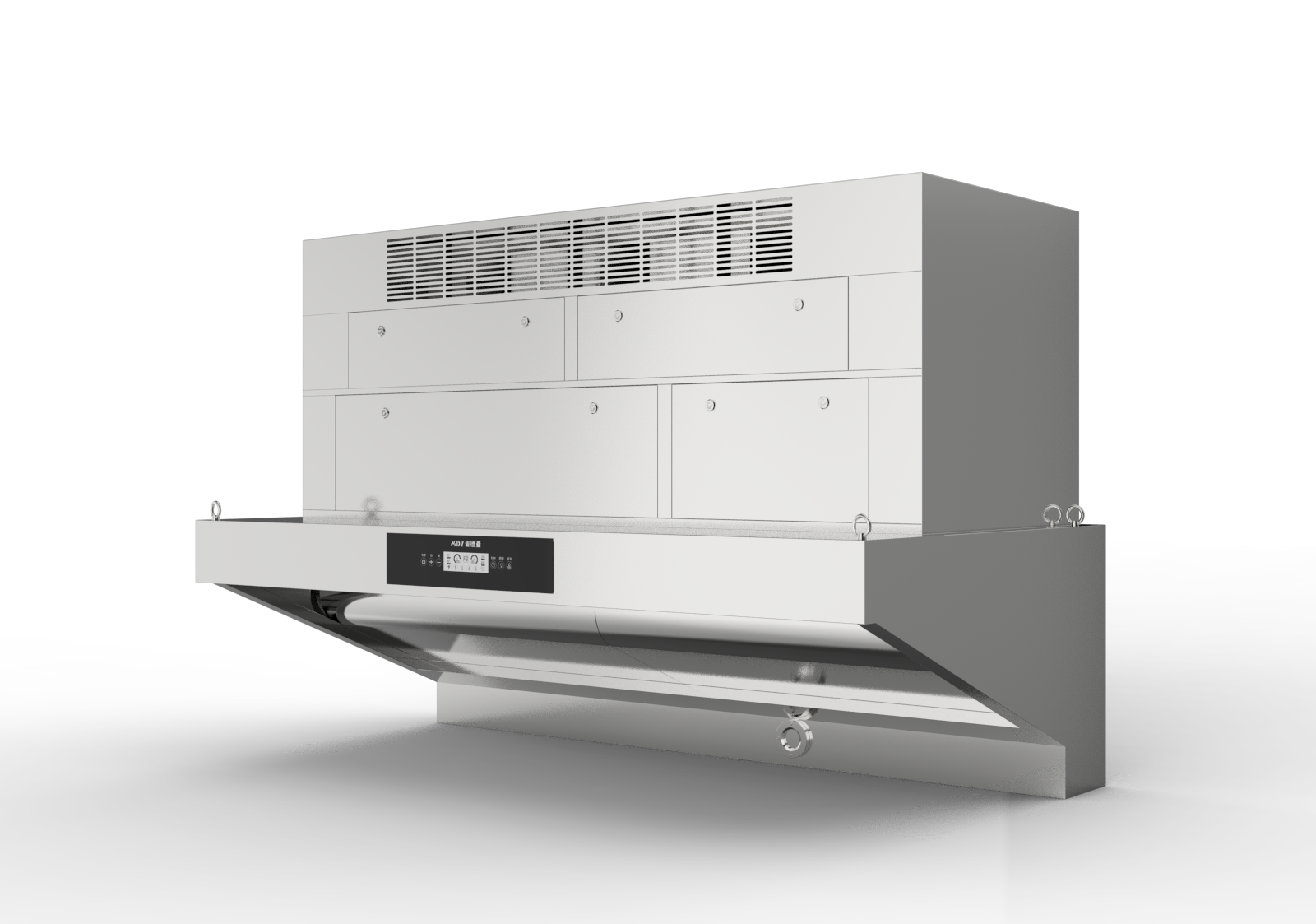
| ESP Engineering for Wok | Dual-zone ESP: first zone captures coarse mode with 10mm plate spacing; second zone captures fine mode with 6mm spacing; Higher voltage for fine particles; Corrosion-resistant tungsten wires |
| Capture Volume Design | 30-50% more capture volume than Western cooking; Thermal plume velocity 0.5-1.0 m/s at hood lip; Minimum capture 0.3 m/s at furthest wok point |
| Souniny Wok Models | Heavy-duty Series standard (2-4 woks); Heavy-duty Series high-volume (4-8 woks); Light-duty Series single wok premium |
Application Scenarios
- Hong Kong PolyU research: Detailed particle analysis found bimodal distribution peaking at 0.3 um and 5 um. Standard single-zone ESP captures 60% of fine mode. Dual-zone captures 95%+ of both modes. Published in Atmospheric Environment.
- Dai pai dong modernization (Hong Kong): Famous 40-year dai pai dong known for best wok hei installed Heavy-duty Series. Chef initially skeptical: Wok hei needs the smoke. Revised: Flavor in food, not air. But now my lungs do not hurt. Business increased.
- China MEE emission standards: Souniny ESP data submitted to Ministry of Ecology and Environment technical working group. Demonstrated dual-zone ESP achieves over 95% PM2.5 removal. Draft standard would require over 90% removal in urban areas.
- CFD optimization study: Optimized hood design achieves 98% capture at 20% lower airflow than traditional — significant energy saving. Incorporated into Souniny design guidelines for Chinese cuisine.