Basement kitchens are increasingly common in dense urban environments. They face unique challenges: no roof access for ductwork, limited exhaust discharge options, moisture issues, and stricter fire safety for below-grade occupancy. ESP offers solutions for each.
| Parameter | Specification |
|---|---|
| Basement Challenges | No roof access; Exhaust to alley/light well/street (odor concern); Drainage below sewer level; Dampness and humidity; Stricter fire code |
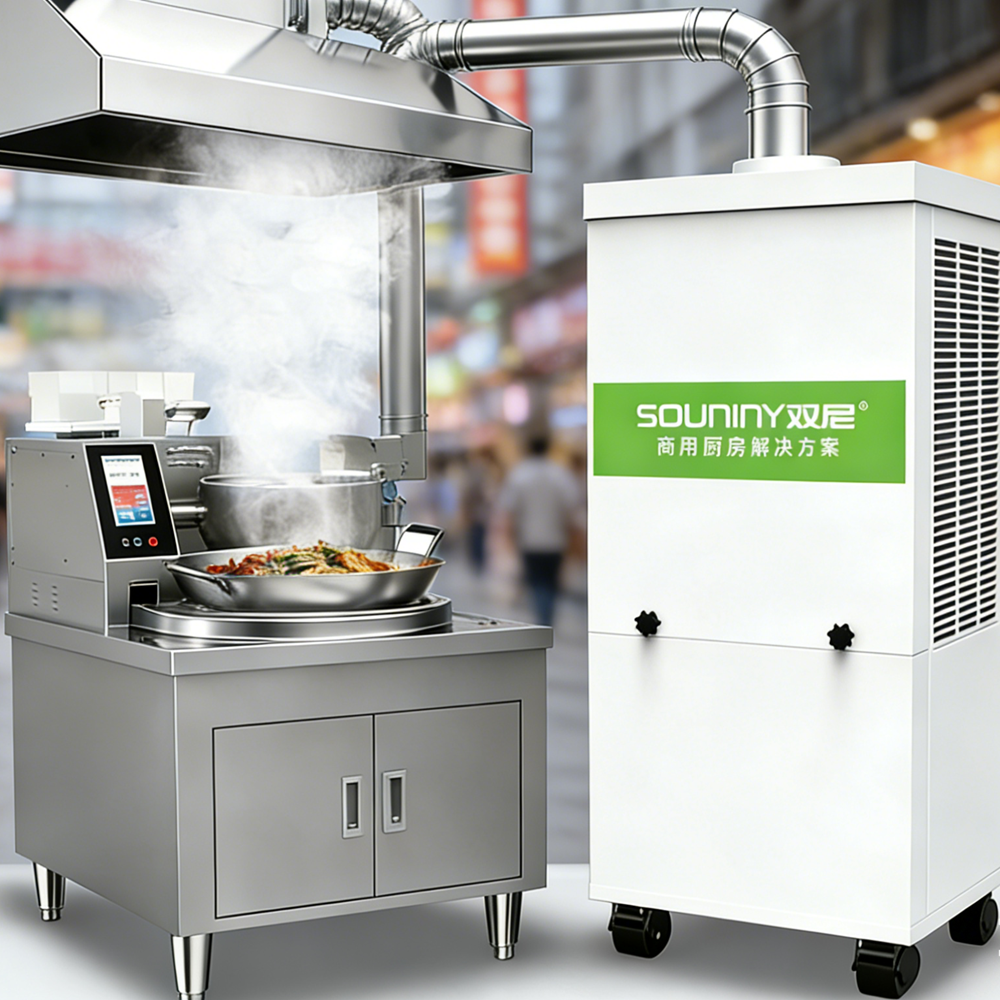
| ESP Advantages | Ductless ESP eliminates roof duct need; Recirculation reduces exhaust volume; Intercepts grease before any duct; Compact for low ceilings |
| Design Approach | Ductless with carbon polishing (zero/minimal exhaust); OR small clean-air duct to nearest wall; Condensate pump for below-grade drainage; Dehumidification integration |
| Fire Safety | Below-grade kitchen requires automatic fire suppression; Ductless ESP eliminates major grease duct fire risk; Coordinate with fire protection engineer |
Application Scenarios
- Basement ramen (Tokyo): Restaurant completely surrounded by adjacent buildings with zero exterior wall access. Ductless ESP with recirculation and carbon polishing allows operation with zero exhaust discharge. Tokyo Fire Department approved after ESP review.
- Underground food court (London): Tube station food court 20m below street. With ESP removing 95%+ grease before 20m riser, the riser is classified as clean air duct — dramatically reducing cost. Riser savings exceeded ESP investment.
- Speak-easy basement bar (New York): Landmark building with prohibited exterior alterations. Cabinet-Cabinet Purifier ductless satisfied preservation requirements while providing commercial-grade ventilation. Health department permit granted after smoke capture test.
- Basement drainage engineering: Kitchen 3m below sewer with submersible condensate pump for ESP drainage (2-5 liters/day). Grease interceptor before pump prevents fouling. Zero drainage issues in 3 years. Documented as reference design.