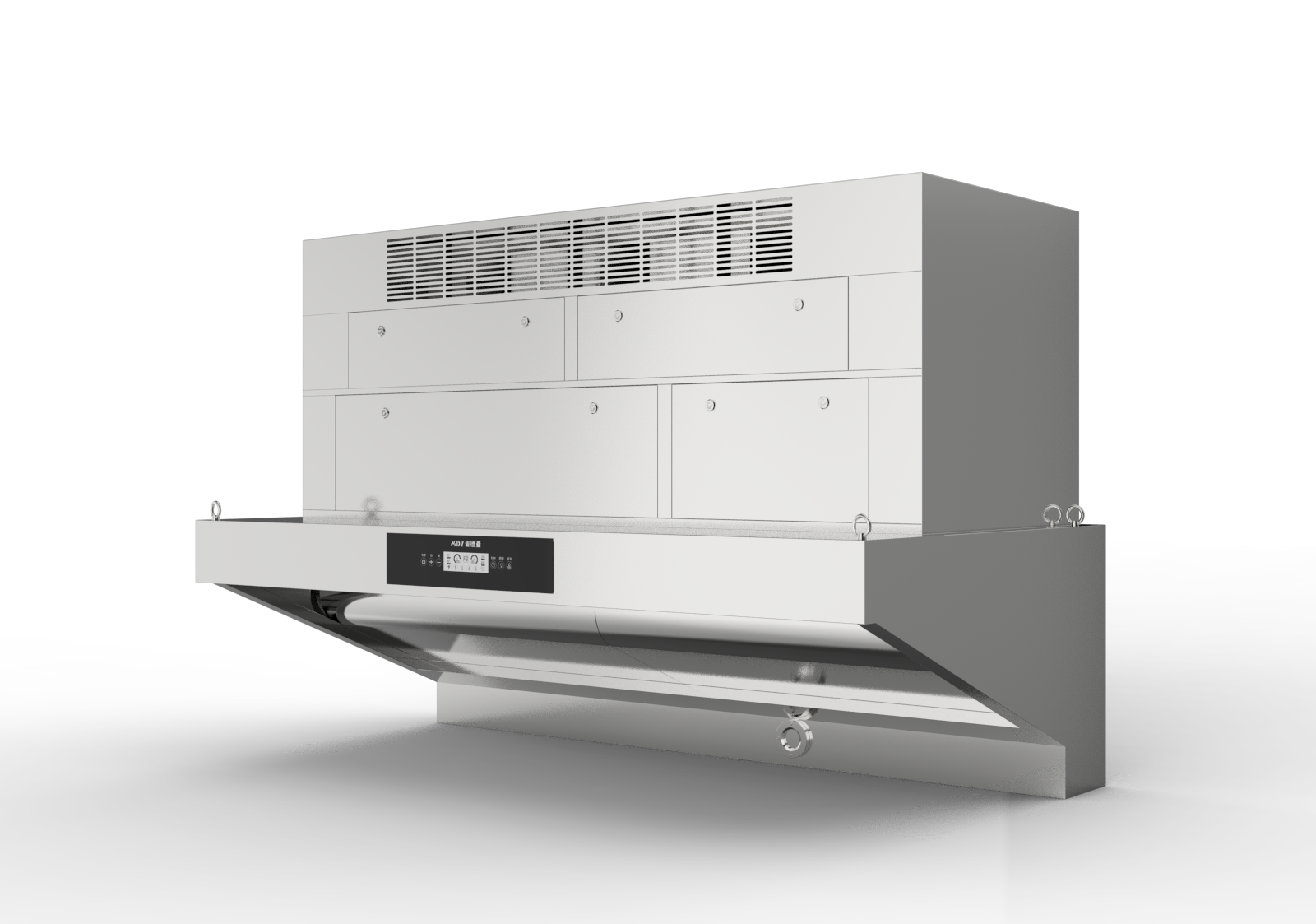
The tandoor operates at 480C (900F) and generates exhaust at 150-300C at the hood intake. Heavy flour dust from naan baking, meat grease from tandoori skewers, and spice smoke create a complex emission profile that standard kitchen ESP cannot handle without modification.
| Parameter | Specification |
|---|---|
| Tandoor Exhaust Characteristics | Temperature: 150-300C at hood; Particulate: flour dust + meat grease + spice smoke; Very high peak loads during naan production |
| Recommended Configuration | High-temperature cyclone pre-filter + temperature dilution damper + High-temp ESP with ceramic insulators + Carbon polishing |
| Pre-Filter Essential | Cyclone captures 80%+ of coarse flour dust and grease droplets |
| Fire Safety | Temperature interlock at 200C; Spark arrestor required by code; Fire-rated duct between tandoor and ESP |
Application Scenarios
- Brick Lane curry house (London): A family-run curry house with 3 tandoors upgraded to Souniny SPL-60 water spray + Heavy-duty Series ESP. Water spray cools exhaust from 180C to 40C and captures 60% of particulate. Neighbor odor complaints stopped immediately, zero in 18 months.
- Tandoori production kitchen (Mississauga): A central kitchen with 6 tandoors uses individual cyclone pre-filters converging to Heavy-duty Series ESP with ceramic high-temp insulators. Commissioned at 97% removal. Zero cell replacement in 4 years.
- Fine dining Indian open kitchen (Dubai): Custom downdraft around tandoor opening ducted to remote ESP plant room with acoustic enclosure. Diners see the tandoor chef but feel zero heat, smoke, or noise.
- Food court Indian stall (Singapore): Two tandoors in compact space use Light-duty Series with high-temp mods. Captures 98% of tandoor emissions. Zero cross-stall smoke complaints.