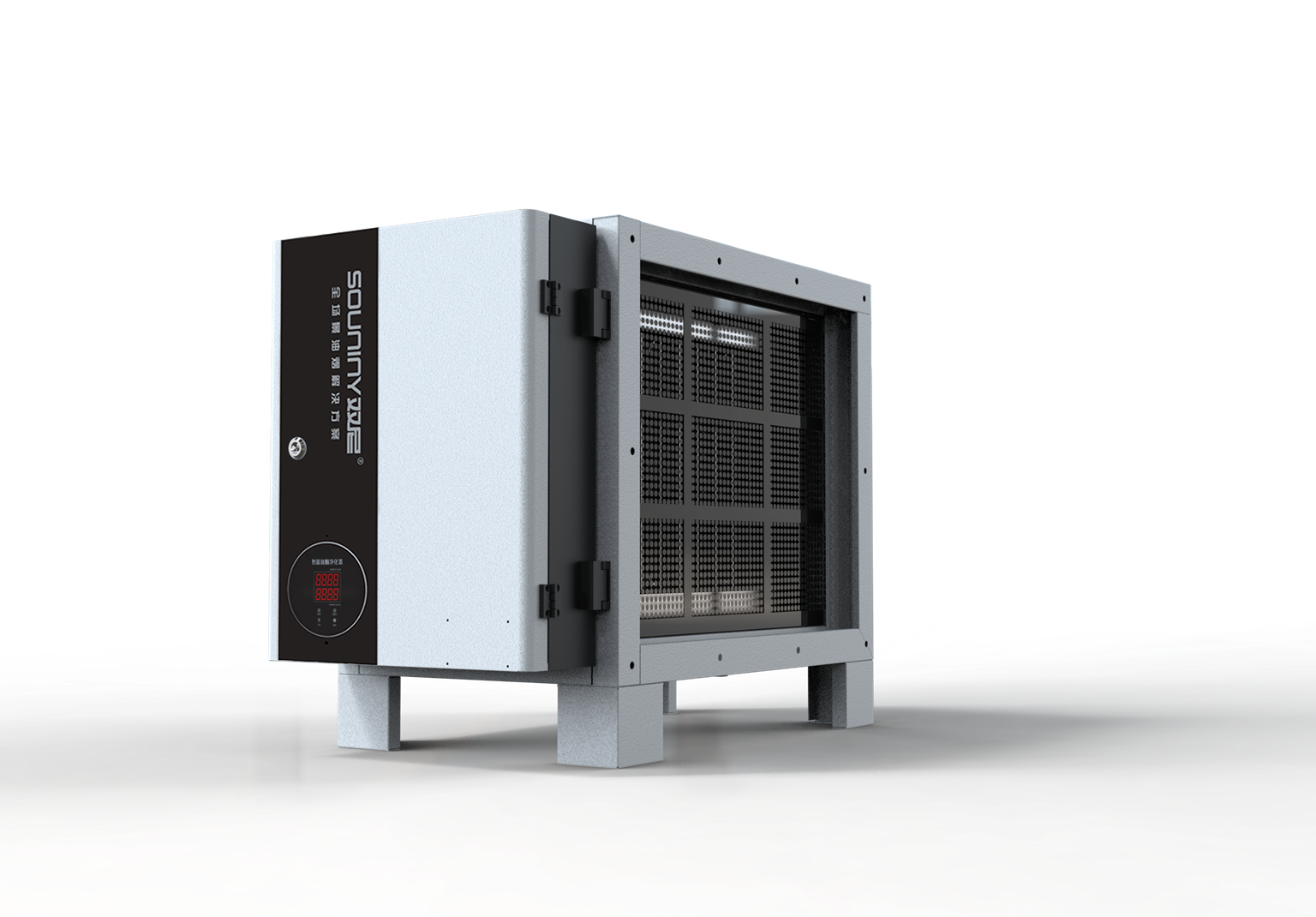
Undersizing an ESP system is the most common mistake in commercial kitchen ventilation design. An undersized system fails to capture cooking emissions; an oversized system wastes energy and money. This guide provides the calculations for correct sizing.
| Parameter | Specification |
|---|---|
| Hood Face Velocity | 0.25-0.5 m/s (light/medium/heavy cooking) |
| Airflow Formula | Airflow (m³/h) = Hood Area (m²) × Face Velocity (m/s) × 3600 |
| Light Cooking Example | 2m hood × 0.25 m/s = 1,800 m³/h → Light-duty Series |
| Heavy Wok Cooking Example | 3m hood × 0.5 m/s = 5,400 m³/h → Heavy-duty Series |
| Duct Sizing Rule | 8-12 m/s duct velocity; calculate cross-section from airflow |
Application Scenarios
- Restaurant design consultant workflow: A kitchen design consultant standardized their sizing methodology using Souniny’s calculation tools. For each project: (1) map cooking equipment and assign emission intensity (light/medium/heavy), (2) calculate required capture airflow per zone, (3) select ESP model with 10-15% capacity margin, (4) verify duct sizing, (5) specify VFD for demand-based control. The standardized approach reduced design time by 40% and eliminated a history of post-installation airflow corrections.
- Kitchen expansion retrofit: A restaurant adding 2 wok stations to an existing 4-station kitchen needed to upgrade from Heavy-duty Series (4,000 m³/h) to accommodate the 50% increase in hood area. The calculation showed 6,000 m³/h required at heavy-duty face velocity → upgrade to Heavy-duty Series. The existing duct was verified for the higher airflow and found adequate, saving significant retrofit cost.
- Common sizing mistakes: (1) Sizing based on kitchen floor area instead of hood area — floor area is irrelevant; capture is at the hood. (2) Ignoring diversity factor — not all stations operate at full simultaneously. A 0.7-0.85 diversity factor can significantly reduce required airflow. (3) Using “rule of thumb” CFM/sq ft without considering cooking type — a bakery needs different capture than a wok station of the same hood dimensions.