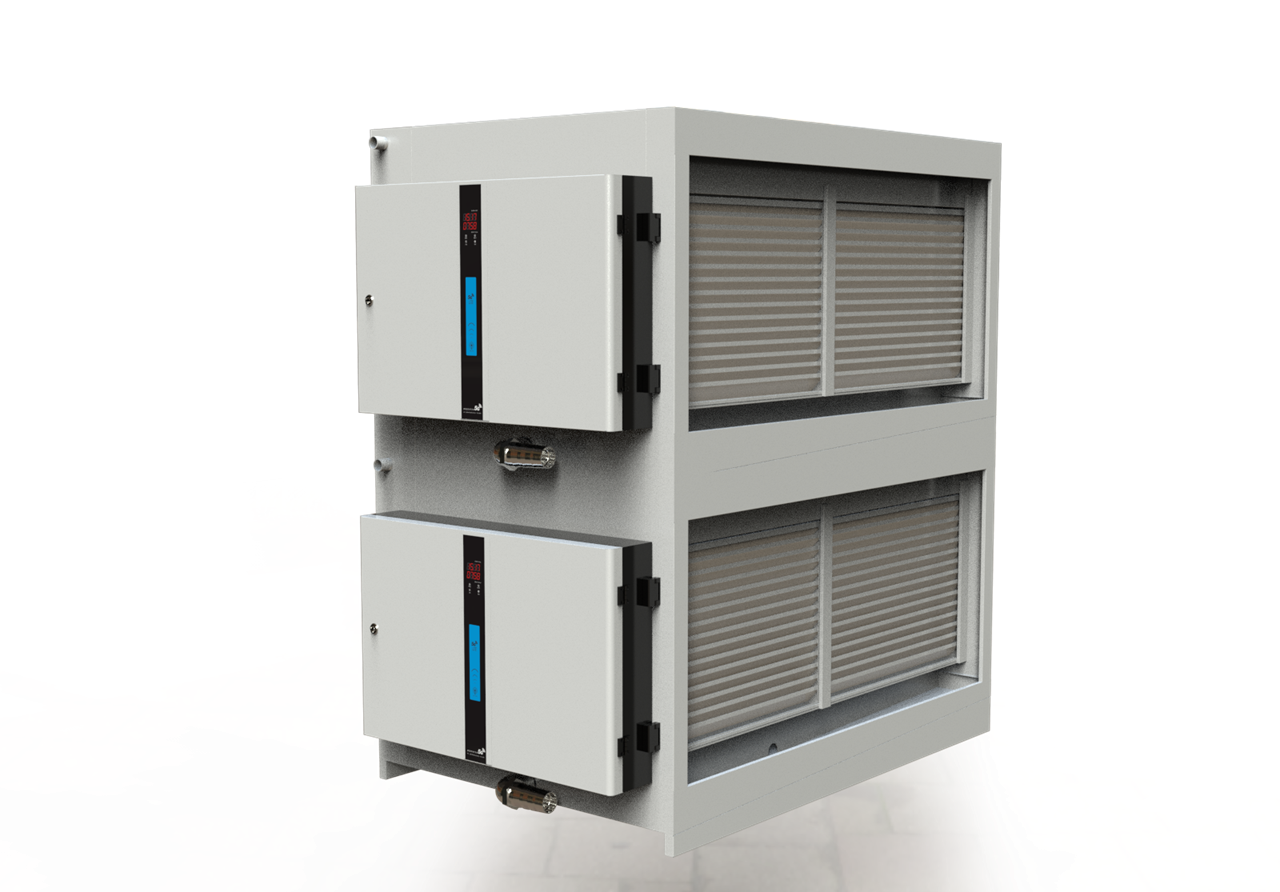
Manual ESP cell cleaning is labor-intensive and takes equipment offline. The Souniny Q-Series solves this with an integrated automatic washing cycle that keeps cells performing without hands-on service.
Product Overview
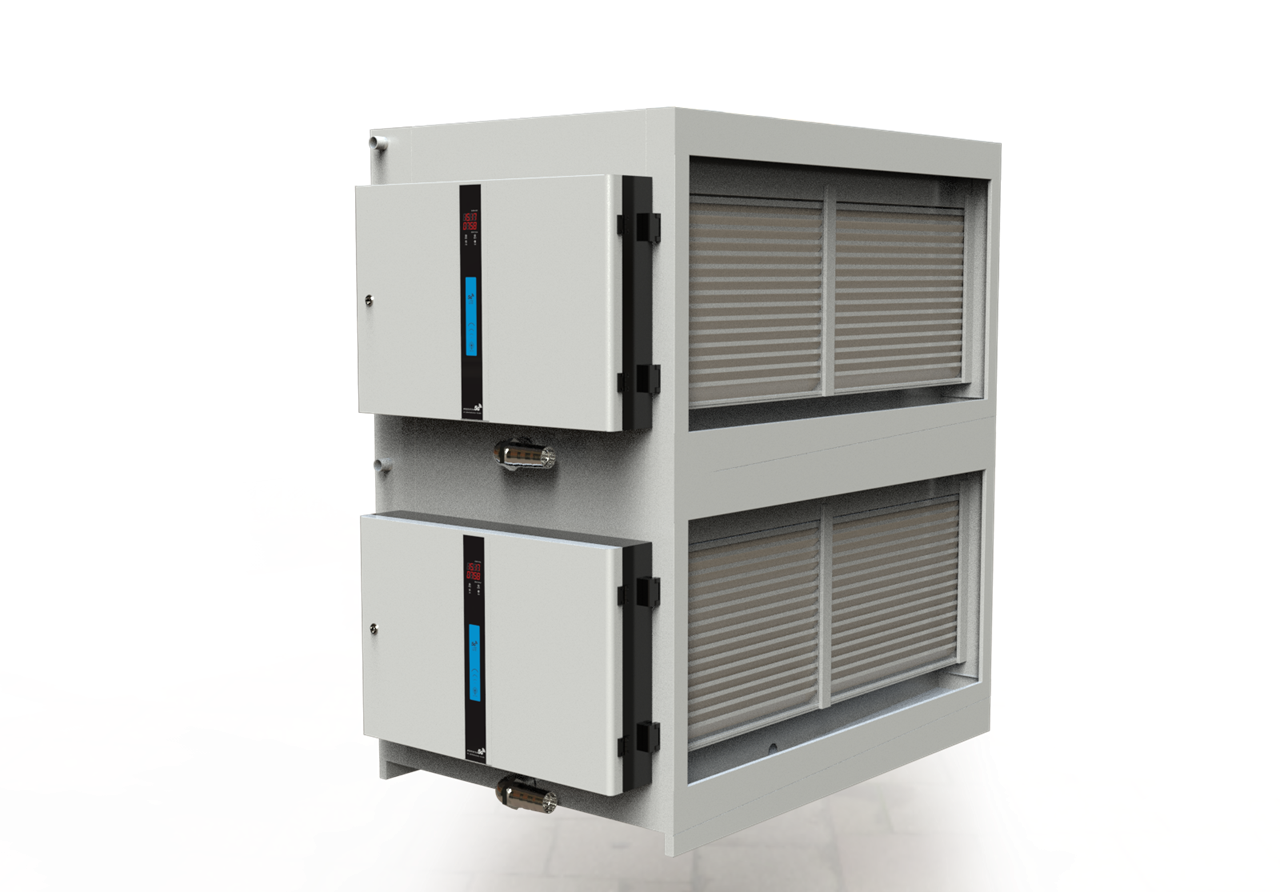
The Auto-Cleaning ESP Series (KL-D-Q40 to Q640) adds an integrated washing cycle to the standard electrostatic precipitator, automatically cleaning the ESP cells to cut downtime and service cost. Covering 4,000 to 64,000 m3/h, the units keep purification stable even in humid or greasy conditions where plain electrostatic units gradually degrade. CE certified, they are ideal for high-duty restaurants, food factories and any site that wants long intervals between manual maintenance. Several sizes are reserved for CE2 certification as the range expands, making this series a future-proof choice for export markets.
.png)
Key Specifications
| Parameter | Value |
|---|---|
| Rated Power | 600 – 1,200 W |
| Max Airflow | 4,000 – 64,000 m3/h |
| Technology | ESP + auto-cleaning cycle |
| Efficiency | >= 95% (typical) |
| Certification | CE (CE2 on several sizes) |
Specifications are typical for the series. Exact values vary by model and customization (voltage, flange, material). Contact Souniny for a model-specific datasheet.
Available Models
.png)
Maintenance & Filter Care
The electrostatic precipitator cells should be cleaned at regular intervals based on cooking intensity and grease load. In typical commercial operation, periodic washing keeps purification efficiency at its rated level. For units with activated carbon deodorization modules, replace the carbon when odor breakthrough becomes noticeable.
We recommend establishing a preventive maintenance schedule tailored to your daily cooking volume. Souniny provides replacement cells, carbon cartridges and spare parts to keep your system running at peak performance. Contact our service team for guidance on setting up a maintenance plan.
Applications
High-duty restaurants, food processing factories, institutional kitchens and any facility that requires long unattended operation between manual maintenance cycles.